How to Choose the Perfect Ladies Office Uniform for Comfort & Elegance
First impressions matter. In a corporate setting, the way employees dress says a lot about the company’s professionalism, culture, and values. For women in particular, choosing the right ladies office uniform is about much more than just appearance—it’s about balancing elegance, comfort, and practicality.
Whether you run a corporate office, hotel, hospital, retail chain, or educational institution, the uniform you provide to your female staff becomes a silent brand ambassador. A well-designed ladies corporate uniform not only makes employees look professional but also enhances their confidence, productivity, and sense of belonging.
This comprehensive guide will help business owners, HR managers, and procurement heads understand how to select the ideal office uniform for females, ensuring your team looks polished while feeling comfortable throughout the workday.
Why Ladies Office Uniforms Matter
Uniforms have always been more than just clothing. They communicate discipline, unity, and professionalism. But when it comes to ladies uniforms, the stakes are even higher because they must address functionality, comfort, modesty, and elegance simultaneously.
Key Benefits of a Thoughtful Ladies Office Uniform:
- Brand Identity: A consistent uniform reflects your brand image and values.
- Employee Confidence: A comfortable, well-fitted outfit helps women feel empowered and professional.
- Equality & Inclusion: Uniforms reduce visible differences, creating a level playing field.
- Customer Trust: Clients often perceive organizations with smartly dressed staff as more reliable and credible.
- Cost-effectiveness: Employees save money and time on daily outfit choices.
Factors to Consider When Choosing a Ladies Office Uniform
Selecting uniforms is not a one-size-fits-all process. Here are the essential factors to keep in mind:
1. Comfort Comes First
Women often spend long hours in their uniforms, so comfort is non-negotiable. Consider:
- Breathable fabrics like cotton blends or lightweight poly-cotton.
- Stretch-friendly materials that allow easy movement.
- Climate adaptability – lighter fabrics for warmer regions, blended fabrics for colder ones.
2. Professional Appearance
The goal is to maintain a neat and elegant look that reflects professionalism. Ensure:
- Tailored fits instead of baggy or overly tight outfits.
- Neutral or brand-specific colors that align with corporate branding.
- Simple yet stylish cuts that balance modern trends with modesty.
3. Durability & Maintenance
Uniforms are worn daily, so durability is essential:
- Opt for fabrics that retain color and shape after multiple washes.
- Stain-resistant materials are a plus for industries like hospitality or healthcare.
- Easy-iron fabrics reduce time and effort for employees.
4. Cultural Sensitivity
Especially in diverse workplaces, uniforms must respect cultural norms:
- Options for full sleeves, longer tunics, or scarves for modest dressing.
- Skirt and trouser alternatives for inclusivity.
5. Design Flexibility
No two roles are the same. A receptionist may require a more formal outfit, while a back-office staff member might need something more practical. Providing slight variations ensures functionality without compromising uniformity.
Popular Styles of Ladies Office Uniforms
Depending on your industry and work culture, here are some tried-and-tested uniform options for women:
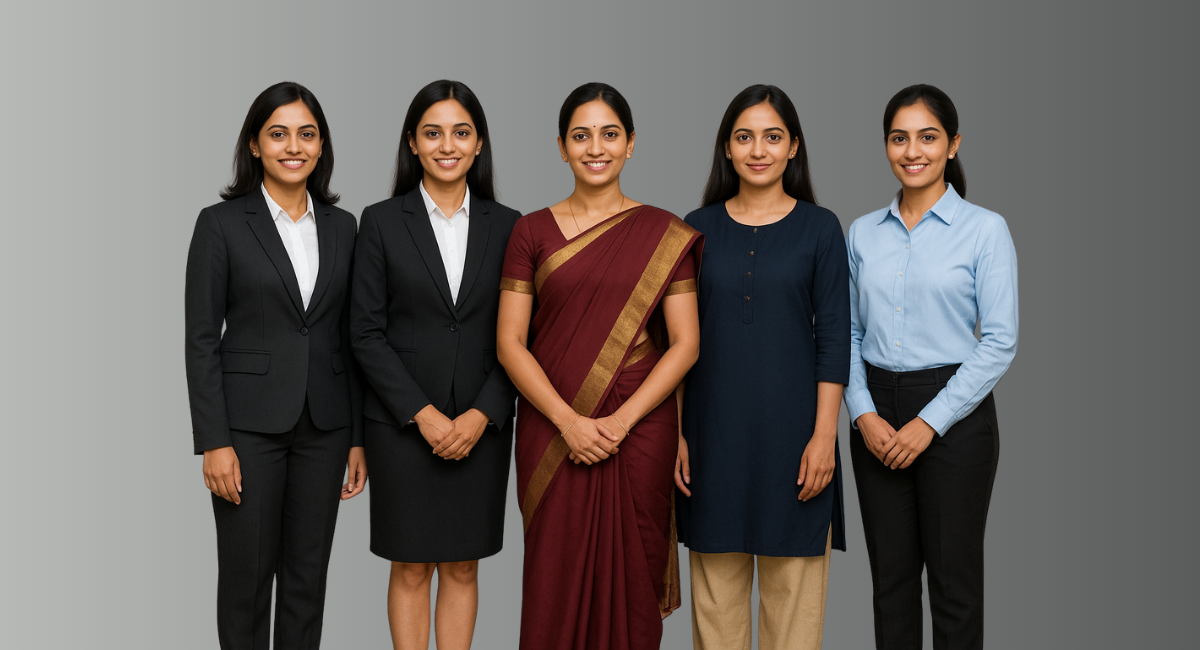
Blazer & Trouser Sets
- Best suited for corporate offices, banks, and consulting firms.
- Adds instant authority and elegance.
- Can be paired with crisp shirts or blouses.
Shirt & Skirt/Trouser Combos
- A timeless office uniform option.
- Neutral shades like navy, grey, or beige work best.
- Skirt lengths should be professional and comfortable.
Saree Uniforms
- Widely adopted in airlines, hospitality, and government sectors in India.
- Elegant and culturally rooted.
- Requires high-quality, easy-to-manage fabrics to avoid daily hassle.
Kurti & Leggings/Palazzos
- A blend of tradition and modernity.
- Highly comfortable for all-day wear.
- Works best in educational institutions, healthcare, and retail sectors.
Dresses & Tunics
- Simple yet stylish, ideal for customer-facing roles.
- Can be designed in corporate colors for brand alignment.
Color Psychology in Ladies Corporate Uniforms
Colors evoke emotions and influence perceptions. Choosing the right shade for your ladies corporate uniform can reinforce your brand identity.
- Blue: Trust, professionalism, calmness – perfect for corporate offices.
- Black/Grey: Authority, sophistication – ideal for formal industries like law and finance.
- White: Purity, cleanliness – widely used in healthcare and hospitality.
- Beige/Pastels: Friendly and approachable – great for customer-facing roles.
- Brand Colors: Incorporating company logo or brand palette boosts recognition.
Fabric Choices for Comfort & Longevity
The right fabric determines how practical and comfortable a uniform will be.
- Cotton Blends: Soft, breathable, and versatile.
- Polyester Blends: Wrinkle-resistant, durable, and cost-effective.
- Viscose/Rayon: Elegant drape with a smooth finish.
- Stretch Fabrics: Ideal for roles requiring mobility.
Always balance aesthetics with practicality when making fabric decisions.
The Importance of Fit and Tailoring
Even the best fabric and design fall flat without proper fitting. Uniforms should be:
- Neither too tight nor too loose.
- Tailored to flatter different body types.
- Available in a range of sizes to ensure inclusivity.
Some organizations also allow customized tailoring for employees, which significantly improves satisfaction.
Accessories & Finishing Touches
Small details can elevate the overall appearance:
- Scarves or ties in company colors.
- Name badges for personal connection.
- Belts, shoes, and stockings to maintain uniformity.
Steps to Designing the Perfect Ladies Uniform for Your Office
- Identify the Purpose: Is it for customer-facing staff, back-end teams, or both?
- Define the Image: Decide how you want clients to perceive your brand – authoritative, friendly, approachable, or elegant.
- Choose the Fabric: Balance comfort, climate, and maintenance needs.
- Pick the Colors: Align with your brand identity while maintaining professionalism.
- Finalize the Style: Shortlist 2–3 designs suitable for your workplace.
- Test Wearability: Provide samples for employees to try and give feedback.
- Finalize & Rollout: Partner with a reliable ladies uniform manufacturer to ensure consistency in quality and timely delivery.
Common Mistakes to Avoid
- Choosing cheap fabrics that wear out quickly.
- Ignoring employee comfort and feedback.
- Selecting overly trendy designs that lose relevance quickly.
- Not considering cultural and body type diversity.
- Overloading the uniform with branding elements.
Frequently Asked Questions (FAQ Schema Ready)
Q1. What is the best fabric for ladies office uniforms?
Cotton-poly blends are ideal as they balance comfort, breathability, and durability. For formal roles, blended suiting fabrics also work well.
Q2. Should women’s uniforms differ based on job roles?
Yes. Receptionists and customer-facing staff may require more formal attire, while back-office employees can have simpler, more comfortable options.
Q3. How do I balance style and professionalism in ladies uniforms?
Opt for tailored fits, neutral colors, and simple yet elegant designs. Avoid flashy patterns or overly trendy cuts.
Q4. How often should uniforms be replaced?
On average, uniforms should be refreshed every 12–18 months depending on wear and tear. High-contact roles may require earlier replacement.
Q5. Can we include both Western and Indian uniform options?
Absolutely. Many organizations today provide dual options like sarees or kurtis along with trousers and blazers for inclusivity.