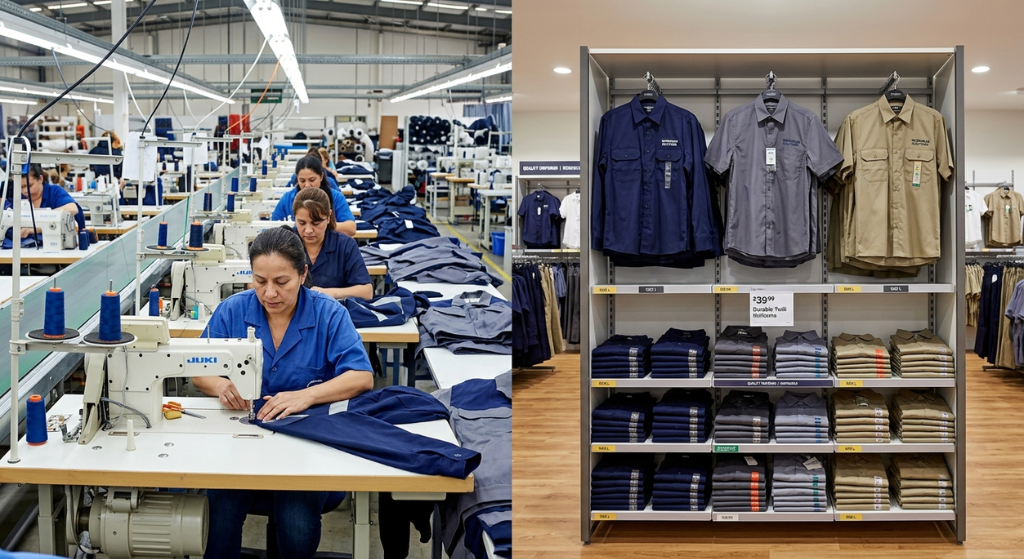
Corporate Uniform Manufacturer vs Uniform Trader: Which Should You Choose?
Your uniforms say a lot about your business before an employee says a word. They show professionalism, build trust, and make your team easy to recognize. So when it’s time to order, one question comes up quickly: should you buy from a corporate uniform manufacturer or from a uniform trader?
Both can fill an order, but they work very differently. The wrong choice can lead to inconsistent fabric, missed deadlines, or inflated costs. The right one gives you uniforms that fit well, last long, and match your brand.
This guide explains how each option works, where each one wins, and how to decide based on your business.
What Is a Corporate Uniform Manufacturer?
A corporate uniform manufacturer makes uniforms itself. It owns or controls the production process, which usually includes fabric sourcing, pattern making, cutting, stitching, embroidery or printing, quality checks, and packing.
When you order from a manufacturer, you deal with the people who actually make the garments. There is no middle layer between your requirements and the factory floor.
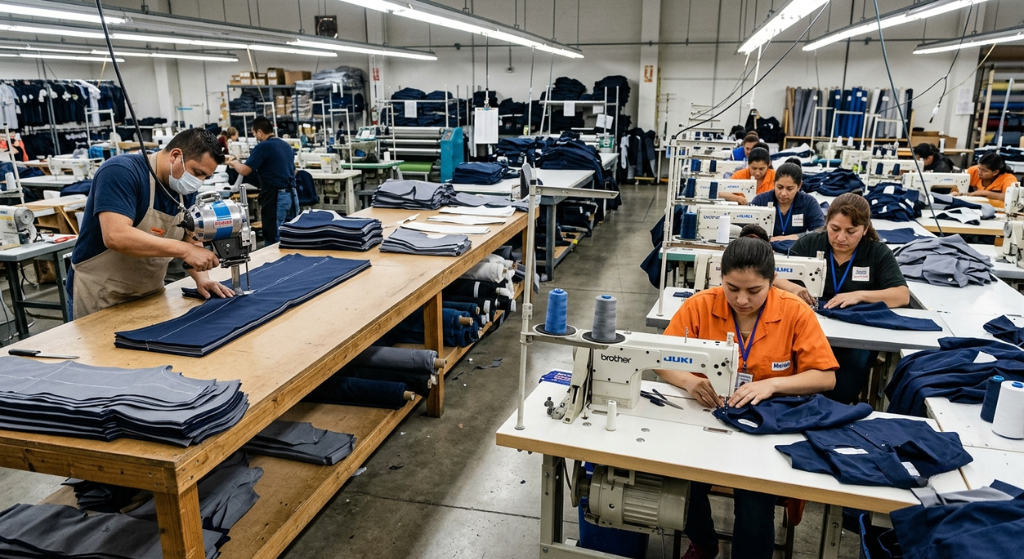
How a Manufacturer Typically Works
- You share your requirements: garment type, fabric preference, colors, logo, quantity, and budget.
- The manufacturer suggests fabrics and designs, then prepares a sample.
- You approve the sample, including fit, color, and branding placement.
- Bulk production begins with checks at each stage.
- Finished uniforms are packed by size, department, or employee and delivered.
Advantages of Choosing a Manufacturer
- Better pricing on bulk orders. There is no trader margin added on top, so large orders usually cost less per piece.
- Full customization. Custom collars, piping, pockets, fabric blends, and exact brand colors are easier to achieve.
- Consistent quality. Production is controlled in-house, so batch-to-batch variation is lower.
- Direct communication. Design changes and fixes go straight to the people doing the work.
- Reliable reorders. Patterns and specifications are stored, so a reorder matches your first batch.
Limitations to Consider
- Higher minimum order quantity (MOQ). Many manufacturers set minimums because production setup takes time.
- Longer lead time for first orders. Sampling and approvals take time.
- Less variety in ready stock. Manufacturers usually make to order rather than hold shelves of finished goods.
What Is a Uniform Trader?
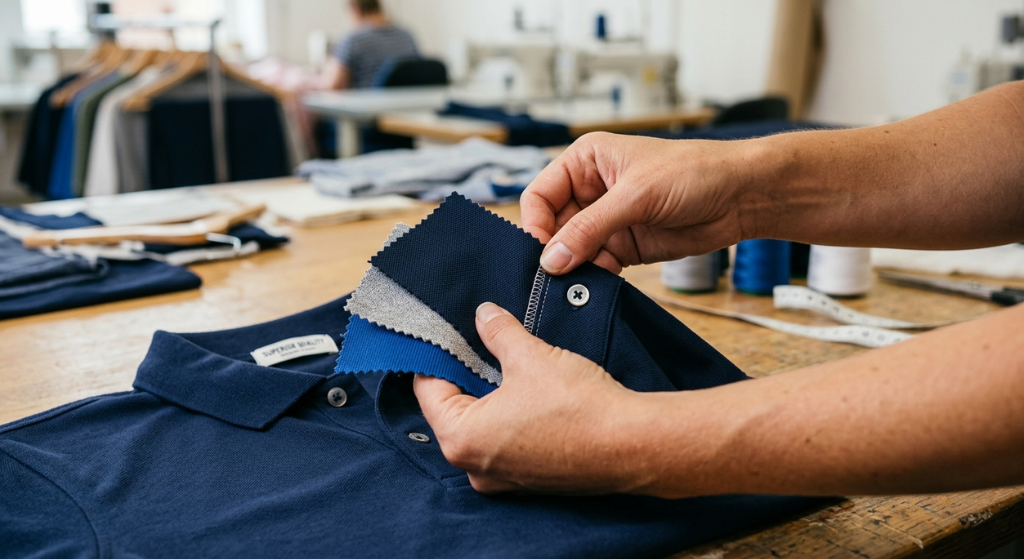
A uniform trader buys finished uniforms or fabric from manufacturers, wholesalers, or other suppliers and resells them to you. Traders may add branding through outsourced embroidery or printing, but they typically don’t control the stitching or fabric.
Think of a trader as a retailer or wholesaler for workwear. They are the connection between you and whoever actually makes the garment.
Advantages of Choosing a Trader
- Low or no MOQ. Traders often sell small quantities, which suits startups and small teams.
- Faster delivery on stock items. If the trader already holds standard shirts, polos, or aprons, you can receive them quickly.
- Wide variety. One trader may offer products from several manufacturers.
- Simple buying process. You can often browse, choose, and order with little back-and-forth.
Limitations to Consider
- Higher per-piece cost. The trader’s margin is built into the price.
- Limited customization. You mostly choose from what already exists.
- Quality can vary. Stock may come from different sources, so batches can differ in shade, fit, or fabric.
- Weaker accountability. If something goes wrong, the trader must go back to their supplier, which slows resolution.
Corporate Uniform Manufacturer vs Uniform Trader: Key Differences at a Glance
| Factor | Uniform Manufacturer | Uniform Trader |
|---|---|---|
| Production control | Makes garments directly | Resells from other sources |
| Pricing (bulk) | Lower per piece | Higher due to margin |
| Customization | Extensive | Limited |
| Minimum order quantity | Usually higher | Usually low or none |
| Lead time | Longer for first order | Faster for stock items |
| Quality consistency | High | Varies by batch |
| Reorder matching | Easy, from stored specs | Can be difficult |
| Best for | Medium to large, long-term needs | Small, urgent, or short-term needs |
Cost: Which Option Is Actually Cheaper?
The answer depends on volume and time horizon.
For small orders, a trader is often cheaper overall. You avoid setup costs, sampling charges, and minimums.
For bulk orders, a manufacturer usually wins. With no middle layer, the per-garment price drops as quantity rises. Over a year or more of regular ordering, the savings add up.
Look beyond the unit price, too:
- Cost per wear. A cheaper shirt that fades or shrinks after a few washes costs more in the long run.
- Replacement frequency. Better fabric and stitching mean fewer replacements.
- Reorder consistency. Mismatched batches force you to replace entire sets to keep the team looking uniform.
- Hidden charges. Ask about logo digitizing, sampling, alterations, and shipping up front.
Quality and Fabric Control
Quality is where the gap is usually widest.
A manufacturer chooses the fabric, controls the stitching, and inspects the output. If you need a breathable cotton blend for a hospitality team or a durable twill for a facilities crew, a manufacturer can match the fabric to the job.
A trader sells what is available. That can be perfectly fine for basic needs, but you have less say over GSM (fabric weight), blend ratio, colorfastness, and stitching standards.
What to Check in Any Uniform Sample
- Fabric weight and feel
- Seam strength and stitch density
- Color accuracy under natural and indoor light
- Shrinkage and fading after a test wash
- Logo clarity and embroidery or print durability
- Comfort during movement, such as sitting, bending, and reaching
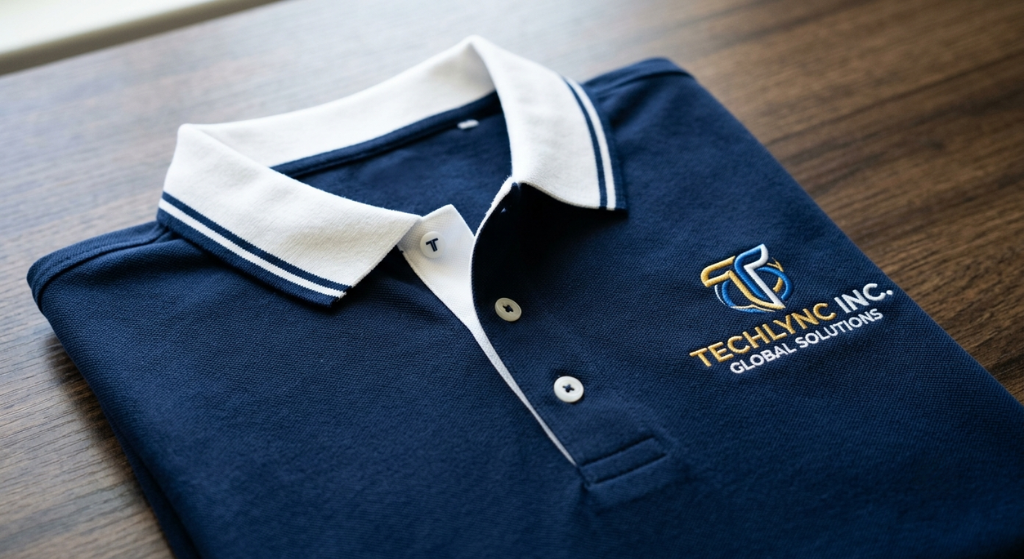
Customization and Brand Identity
Uniforms are a branding tool. They appear in customer interactions, photos, events, and daily operations.
If brand consistency matters, a manufacturer gives you more control over:
- Exact brand colors through custom dyeing or color matching
- Unique design details such as contrast panels, piping, and special collars
- Role-based variations such as different designs for front desk, kitchen, and management
- Logo placement and technique including embroidery, screen printing, or heat transfer
- Gender-specific and inclusive fits for a wider range of body types
A trader can still add your logo to existing garments, but you will be limited by what is on offer. For brands that rely on a distinctive look, that limitation matters.
Lead Time, MOQ, and Flexibility
Neither option is always faster.
Manufacturer timeline: The first order takes longer because of sampling, approval, and production. Once your specifications are locked in, reorders move quickly.
Trader timeline: If your chosen items are in stock, delivery can be very fast. If branding is outsourced, add time for that step.
On minimum order quantity, traders have the advantage for small teams. Some manufacturers do accept smaller orders, but expect a higher per-piece price in that case.
Tip: If you have a hard deadline, such as a launch or a large event, ask both types of supplier for a written delivery schedule before committing.
After-Sales Support and Accountability
Mistakes happen: a wrong size, a faded logo, a defective batch. What matters is how quickly they get fixed.
With a manufacturer, the people who made the garments can find the cause and correct it directly. With a trader, the issue passes through an extra layer, which can slow replacements or lead to disputes over responsibility.
Before you sign, ask any supplier:
- What is your policy on defects and wrong deliveries?
- Do you offer size exchanges?
- How do you handle reorders for new joiners?
- Can you store my specifications for future orders?
When a Corporate Uniform Manufacturer Is the Better Choice
Choose a manufacturer if:
- You need uniforms for 50 or more employees, or expect to grow
- You want a custom design, specific fabric, or exact brand colors
- You plan to reorder regularly for new hires and replacements
- Consistency across batches matters to your brand
- You want better long-term value rather than the lowest upfront price
- Your industry has specific requirements, such as hygiene, durability, or safety visibility

Common examples: hospitals and clinics, hotels and restaurants, schools, security services, manufacturing units, retail chains, and corporate offices with a defined dress code.
When a Uniform Trader Makes More Sense
A trader can be the smarter option if:
- You have a small team and need only a few uniforms
- You need something quickly with no time for sampling
- Your needs are basic, such as plain polos, aprons, or T-shirts
- You are testing a new business and don’t want to commit to large volumes
- The uniforms are for a short-term event or promotion
For temporary needs, the flexibility of a trader often outweighs the downsides.
How to Vet Any Uniform Supplier
Whether you choose a manufacturer or a trader, a few checks protect you from unpleasant surprises.
- Ask for samples. Never place a bulk order without handling the actual fabric and checking the stitching.
- Visit or video-tour the facility. A genuine manufacturer will usually show you their production area.
- Check past work. Ask for photos or references from businesses similar to yours.
- Get everything in writing. Quantities, specifications, pricing, delivery dates, and replacement terms should all be documented.
- Confirm payment terms. Standard practice is a partial advance with the balance on delivery or dispatch.
- Test communication. A supplier who responds slowly before the sale will likely respond slowly after it.
- Clarify who does what. If branding or stitching is outsourced, ask who is responsible for quality.
Red Flags to Watch For
- Refusal to provide samples
- Prices far below every other quote
- Vague answers about who produces the garments
- No written terms or invoices
- Pressure to pay the full amount upfront
- Reluctance to give references
Can You Use Both?
Yes, and many businesses do.
A practical hybrid approach looks like this:
- Manufacturer for core, branded uniforms worn daily by your main staff
- Trader for quick top-ups, seasonal items, or event-specific apparel
This keeps your brand look consistent while giving you flexibility when plans change quickly.
Final Thoughts
The choice between a corporate uniform manufacturer and a uniform trader comes down to what your business needs right now and where it is heading.
If you value customization, consistency, and long-term savings, a manufacturer is usually the stronger partner. If you need speed, small quantities, and simple items, a trader can serve you well.
Start by listing your quantity, budget, timeline, and brand requirements. Then request samples and written quotes from both types of supplier. The numbers and the samples will usually make the decision clear.
Frequently Asked Questions
What is the difference between a uniform manufacturer and a uniform trader?
A uniform manufacturer produces garments directly, handling fabric, stitching, and finishing. A uniform trader buys ready-made uniforms or fabric from other suppliers and resells them. Manufacturers offer more control over design and quality, while traders offer flexibility and lower minimum orders.
Is a uniform manufacturer cheaper than a trader?
For bulk orders, usually yes. A manufacturer removes the middle layer, so the per-piece price is typically lower. For small quantities, a trader may be cheaper because there are no setup costs or minimum order requirements.
Can a manufacturer make custom corporate uniforms?
Yes. Custom design is one of the main strengths of a manufacturer. You can choose fabric, color, fit, collar and pocket styles, and logo placement, including embroidery or printing.
What is the typical minimum order quantity for corporate uniforms?
It varies by manufacturer, garment type, and level of customization. Traders often have little or no minimum. It is best to ask each supplier for their MOQ and compare pricing at different quantity levels.
How do I verify that a uniform supplier is genuine?
Ask for fabric and garment samples, request references or photos of past work, and check whether they can show you their production facility. Always get quotes, specifications, and delivery terms in writing.
How long does it take to produce corporate uniforms?
Timelines depend on order size, customization, and the supplier’s workload. The first order generally takes longer because of sampling and approval. Reorders are faster once specifications are on file. Always request a written delivery schedule.
Which is better for a small business: manufacturer or trader?
If your team is small and your needs are basic, a trader is often more practical. If you are planning to grow or want distinctive branded uniforms, a manufacturer may be worth it even at a small scale, provided the supplier accepts lower quantities.
Ready to Outfit Your Team?
Looking for uniforms that fit well, last long, and represent your brand properly? [Your Company Name] designs and manufactures custom corporate uniforms for businesses of all sizes.
- Free fabric and design consultation
- Sample before bulk production
- Transparent pricing and on-time delivery
[Request a Free Quote] or [Call/WhatsApp Us Today] and tell us about your team. We will help you choose the right fabric, design, and quantity.