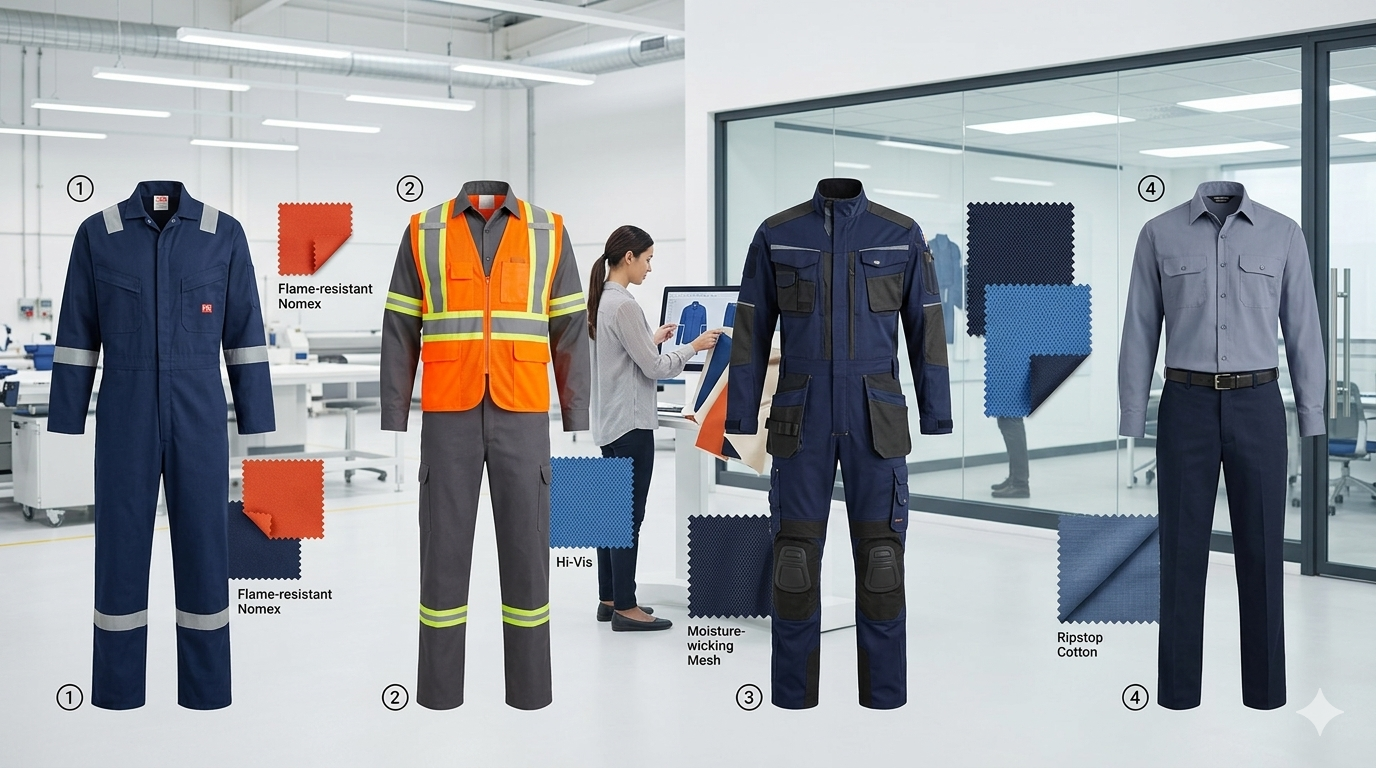
What Fabric Is Best for Corporate Uniforms in India? A Complete FAQ
Choosing the right fabric is one of the most important decisions when designing corporate uniforms. A uniform may look professional on day one, but its real value comes from how comfortable, durable, presentable and easy to maintain it remains after weeks or months of regular use.
For businesses, the choice becomes even more important because employees may wear uniforms for several hours every day. The fabric needs to work across different working environments, seasons and levels of activity while maintaining a polished corporate appearance.
So, what fabric is best for corporate uniforms in India?
There is no single fabric that works perfectly for every company. Cotton is comfortable and breathable, polyester is durable and easy to maintain, while cotton-polyester blends often offer a practical balance of comfort, appearance and longevity.
This guide answers the most common questions businesses ask before selecting uniform fabrics, helping you choose the right material for your employees and industry.
What Should You Consider When Choosing Corporate Uniform Fabric?
Before choosing a fabric, consider more than just its appearance. A good corporate uniform fabric should match the working conditions, employee requirements and maintenance expectations of your organisation.
Here are the key factors to evaluate:
- Comfort: Employees should be able to wear the uniform comfortably for long hours.
- Breathability: Important for India’s warm and humid conditions.
- Durability: The fabric should withstand frequent washing and daily use.
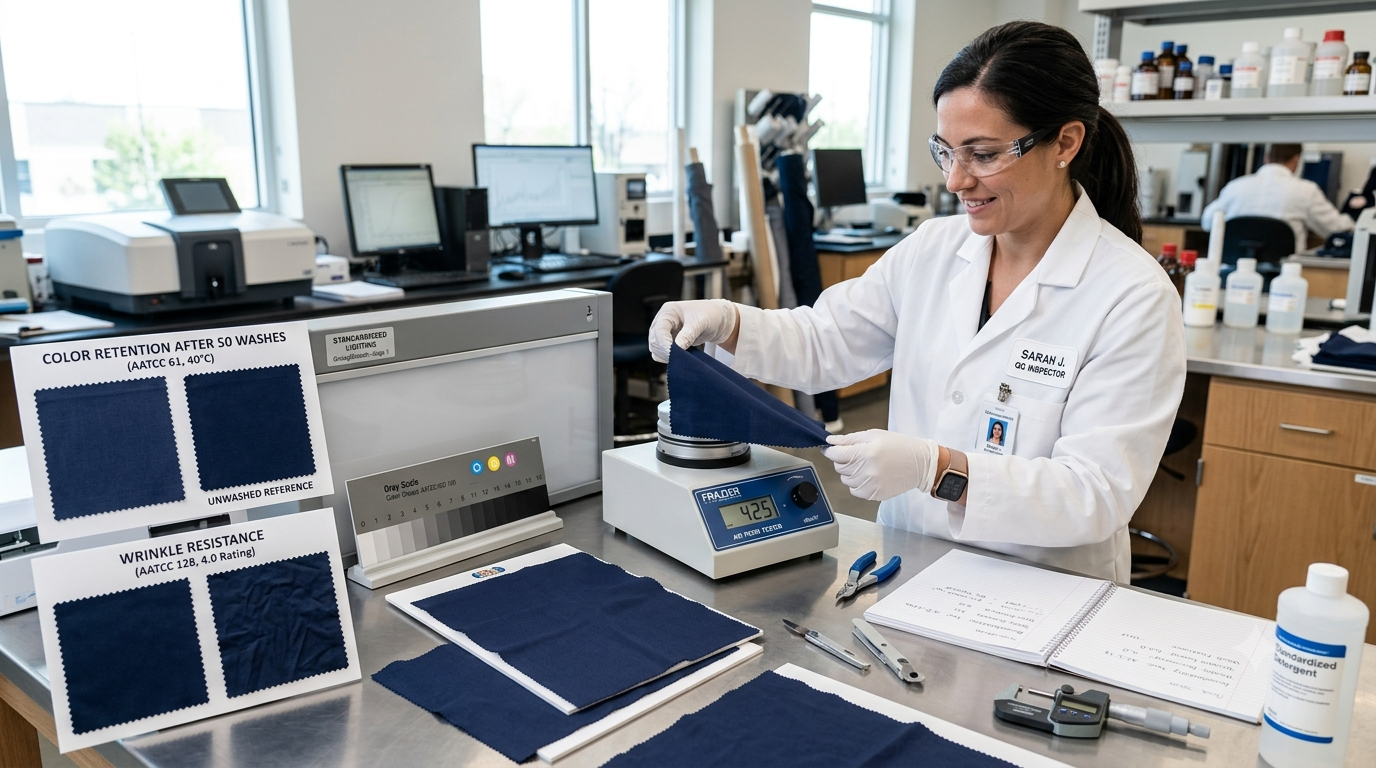
- Colour retention: Corporate colours should remain consistent after repeated washing.
- Wrinkle resistance: Less creasing helps employees maintain a professional
appearance. - Ease of maintenance: Uniforms should not require complicated washing or ironing.
- Fit and drape: The fabric should work well with the chosen uniform design.
- Cost: Consider the total lifecycle cost rather than only the initial fabric price.
- Industry requirements: A corporate office has different needs from a hotel, factory or
healthcare organisation.
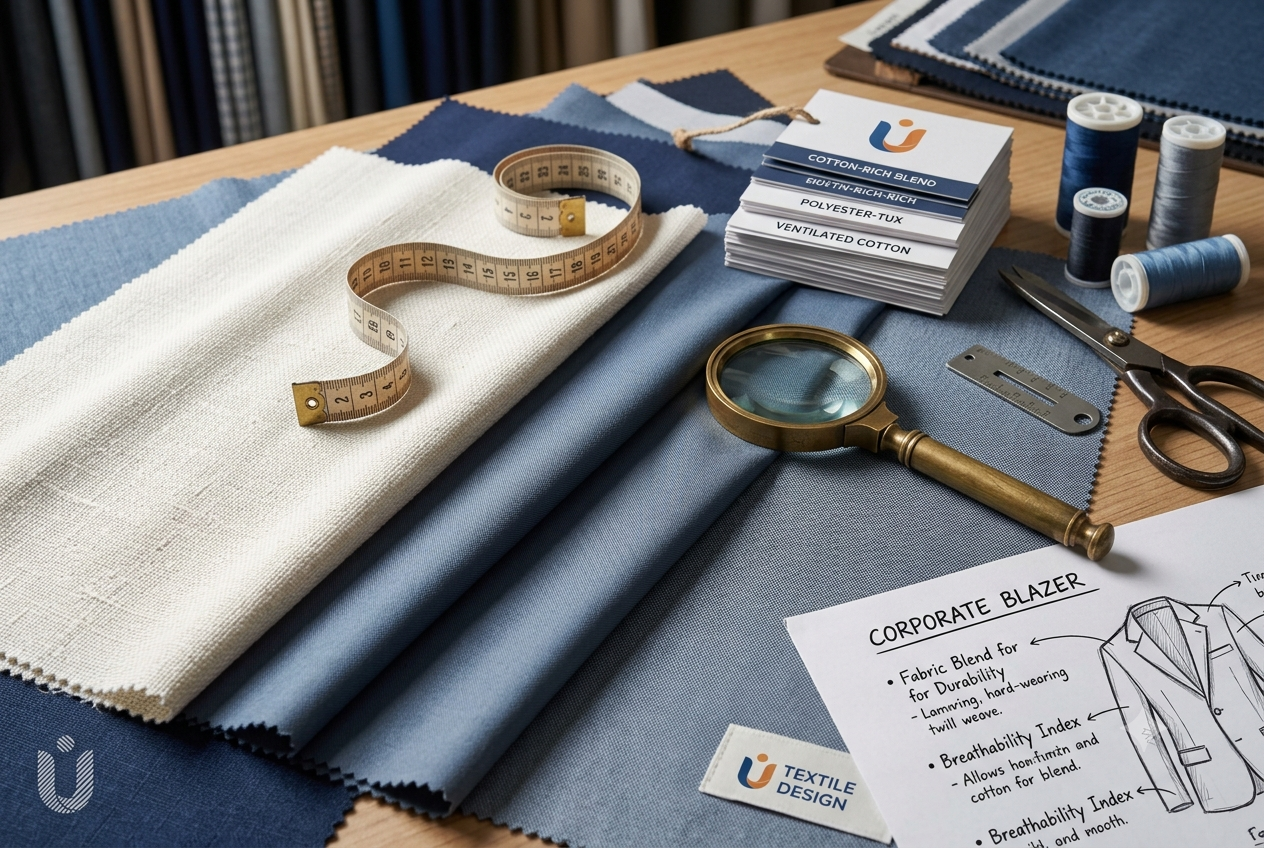
The best approach is to balance comfort, durability, maintenance and appearance rather than choosing fabric based on one feature alone.
Which Fabric Is Best for Office Uniforms ?
For most office environments, cotton-polyester blends are among the most practical
choices for corporate uniforms.
They combine many of the advantages businesses look for in everyday workwear. Cotton
provides softness and breathability, while polyester contributes strength, shape retention and easier maintenance.
For air-conditioned offices, meeting rooms and customer-facing environments, a good-quality blended fabric can provide a polished appearance without becoming excessively difficult to maintain.
Why Cotton-Polyester Blends Work Well
A blended fabric can offer:
- Good everyday comfort
- Better durability than many lightweight cotton fabrics
- Improved wrinkle resistance
- Easier washing and drying
- Better shape retention
- Professional appearance
- Suitability for regular corporate wear

However, the ideal blend depends on the uniform design and working environment. A sales team working outdoors may need a more breathable fabric, while employees in air-conditioned offices may prioritise structure and wrinkle resistance.
Is Cotton Good for Corporate Uniforms?
Yes, cotton is a good fabric for corporate uniforms, particularly when comfort and breathability are priorities.
Cotton is naturally soft and comfortable against the skin. It also absorbs moisture, making it appealing for employees working in warm conditions.
For uniforms worn in offices without strong air conditioning, outdoor roles, educational
environments or other warm workplaces, cotton can be an excellent option.
Advantages of Cotton Uniforms
- Comfortable for long working hours
- Breathable and relatively lightweight
- Soft against the skin
- Suitable for warm weather
- Natural fibre
- Available in different weights and finishes
However, cotton also has limitations.
Pure cotton can wrinkle more easily and may require more ironing. Depending on the fabric construction and finishing, it may also shrink or lose shape over repeated washing.
For businesses that want the comfort of cotton with easier maintenance, a cotton-polyester blend can be a better overall solution.
Is Polyester Suitable for Uniforms?
Yes, polyester is widely suitable for corporate and work uniforms, particularly where
durability and easy maintenance are important.
Polyester fibres are strong and generally resistant to shrinking and wrinkling. This makes
polyester-based fabrics practical for employees who wear uniforms frequently and for businesses that need uniforms to maintain a consistent appearance.
Benefits of Polyester Uniform Fabric
- Highly durable
- Good resistance to wrinkles
- Easy to wash and maintain
- Dries relatively quickly
- Holds its shape well
- Suitable for frequent use
- Can retain colour effectively when properly manufactured and cared for
The main consideration is breathability. Depending on the fabric construction and blend, some polyester fabrics can feel warmer than cotton.
That is why fabric selection should consider weave, weight, finishing and fibre composition,
rather than simply choosing “polyester” or “cotton.”
What Fabric Is Best for Corporate Uniforms in Summer?
For summer uniforms in India, lightweight cotton, cotton-rich blends and breathable
performance fabrics are strong options.
The right choice depends on whether employees work indoors, outdoors or move between
different environments.
Best Summer Uniform Fabrics
- Cotton is breathable and comfortable, making it suitable for hot weather and everyday wear.
- Cotton-Polyester Blend – A lightweight blend can provide better durability and wrinkle resistance while retaining
reasonable comfort. - Linen Blends – Linen can offer excellent breathability and a distinctive premium appearance, although it tends to wrinkle more easily than synthetic blends.
- Lightweight Performance Fabrics
For employees who spend significant time outdoors or are physically active, specially
engineered fabrics designed for moisture management and airflow may be more appropriate.
For Indian summers, avoid unnecessarily heavy fabrics. Fabric weight and construction
matter just as much as fibre composition.
What Fabric Is Easiest to Maintain?
When easy maintenance is the priority, polyester and polyester-blend fabrics are generally
among the easiest options.
Corporate uniforms are washed frequently, sometimes several times a week. A fabric that dries quickly, resists wrinkles and maintains its shape can significantly reduce maintenance effort.
For businesses, this also matters operationally. Employees spend less time dealing with ironing and complicated garment care.
Easy-Care Fabric Features to Look For
Look for fabrics that offer:
- Wrinkle resistance
- Low shrinkage
- Good colour fastness
- Quick drying
- Shape retention
- Machine-wash compatibility
- Minimal ironing requirements
A fabric may have excellent specifications but still perform poorly if it is poorly manufactured. Therefore, always evaluate fabric quality, finishing and garment construction together.
Which Fabric Lasts the Longest?
Polyester and durable polyester-blend fabrics can provide excellent longevity for
corporate uniforms, especially when uniforms are washed frequently.
However, durability does not depend only on the fibre.
The overall lifespan of a uniform is affected by:
- Fabric quality
- Fabric weight
- Weave or knit construction
- Stitching quality
- Colour fastness
- Washing conditions
- Frequency of use
- Garment design
- Finishing quality
For example, a high-quality cotton-polyester blend with strong stitching can potentially perform better in daily use than a low-quality polyester fabric.
When comparing suppliers, ask for fabric samples and, where possible, test them through
actual washing and regular wear before placing a large uniform order.
What Fabric Is Best for Daily Wear?
For daily corporate wear, a cotton-polyester blend is often one of the most balanced
choices.
Employees need uniforms that are comfortable enough for long working hours but durable enough to withstand regular washing.
A good daily-wear uniform fabric should ideally provide:
- Comfort
- Breathability
- Durability
- Colour retention
- Wrinkle resistance
- Easy maintenance
- Good appearance throughout the workday
For standard office uniforms, a medium-weight blended fabric is often a practical starting point.
For outdoor or more active roles, consider lighter and more breathable options.
Which Is Better for Corporate Uniforms:
Cotton or Polyester?
Neither is universally better. The right choice depends on your organisation’s requirements.
For many businesses, the blend offers the best compromise.
However, companies should not select fabric solely from a generic comparison table. The
actual fabric specification, weight, construction and finish can significantly affect
performance.
How Does Fabric Choice Affect Corporate
Branding?
Uniform fabric also influences how your brand is perceived.
A corporate uniform is more than employee clothing. It can become a visible part of your
company’s identity, especially for employees who interact with customers.
A well-designed uniform should communicate:
- Professionalism
- Consistency
- Reliability
- Brand identity
- Attention to detail
Fabric plays an important role in achieving that appearance.
For example, structured fabrics may work well for formal office shirts and trousers, while softer
or lighter fabrics may be more appropriate for relaxed corporate environments.
The fabric should also support your brand colours. Good colour fastness is important because faded uniforms can quickly make an otherwise professional uniform look worn out.
How Should Businesses Choose Uniform
Fabric?
If you are ordering uniforms for a company, avoid selecting fabric based only on a catalogue photograph.
Instead, follow a simple process.
1. Understand the Work Environment
Ask where employees will wear the uniform. Is it:
- Air-conditioned office?
- Outdoor location?
- Factory?
- Hotel?
- Retail store?
- Hospital?
- School or institution?
- Customer-facing environment?
2. Determine Daily Usage
A uniform worn five days a week requires different performance characteristics from one worn occasionally.
3. Consider the Climate
India has significant differences in temperature and humidity across regions. Fabric selection should account for local weather and whether employees work indoors or outdoors.
4. Decide Your Maintenance Expectations
If employees are responsible for washing and ironing their own uniforms, easy-care fabric may be especially valuable.
5. Test Fabric Samples Before bulk production, check:
- Feel
- Weight
- Breathability
- Colour
- Stretch
- Shrinkage
- Wrinkling
- Stitch performance
- Washing performance
6. Evaluate the Complete Garment
The best fabric can still produce a poor uniform if the pattern, stitching or fit is inadequate.
The best fabric can still produce a poor uniform if the pattern, stitching or fit is inadequate.
Why Work With Professional Corporate
Uniform Manufacturers?
Choosing a fabric is only one part of creating a successful uniform programme.
Experienced corporate uniform manufacturers can help businesses select fabrics according to employee roles, climate, brand identity and garment requirements.
A professional manufacturer can typically support the process from:
- Fabric selection
- Design development
- Sampling
- Size planning
- Branding and embroidery
- Bulk production
- Quality control
- Delivery
This can make the process much easier for HR teams, procurement managers and business owners managing uniforms for multiple employees.
Businesses looking for reliable suppliers can also compare experienced uniform
manufacturers in India based on fabric options, manufacturing capabilities, customisation, minimum order quantities and quality standards.
For companies based in Maharashtra, working with established uniform manufacturers in Mumbai can also simplify sampling, communication, fittings and production coordination.
Common Mistakes to Avoid When
Choosing Uniform Fabric
Choosing the cheapest fabric A lower upfront price may not mean lower overall cost. If uniforms wear out quickly or require frequent replacement, the total cost can become higher.
Ignoring employee comfort Employees wear uniforms for long periods. Uncomfortable clothing can affect how they feel throughout the workday.
Selecting fabric only by appearance A fabric may look excellent in a showroom but behave differently after repeated washing.
Not requesting samples Always test samples before approving a large production run.
Using the same fabric for every role A receptionist, delivery executive and factory employee may have completely different uniform requirements.
Forgetting maintenance Consider how the uniform will be washed, dried, ironed and stored.
Frequently Asked Questions About
Corporate Uniform Fabrics
What is the best fabric for office uniforms?
Cotton-polyester blends are often a practical choice for office uniforms because they balance comfort, durability, wrinkle resistance and easy maintenance.
Is cotton good for corporate uniforms?
Yes. Cotton is comfortable and breathable, making it particularly suitable for warm conditions. However, it can wrinkle more easily than polyester or blended fabrics.
Is polyester suitable for uniforms?
Yes. Polyester is durable, wrinkle-resistant, quick-drying and easy to maintain. The right
construction and fabric weight are important for comfort.
What fabric is best for summer corporate uniforms?
Lightweight cotton, cotton-rich blends and breathable performance fabrics are good options for summer. The ideal choice depends on whether employees work indoors or outdoors.
What fabric is easiest to maintain?
Polyester and polyester-blend fabrics are generally easy to maintain because they tend to resist wrinkles, dry quickly and retain their shape.
Which uniform fabric lasts the longest?
High-quality polyester and polyester-blend fabrics can offer excellent durability. However,
garment construction, washing practices and fabric quality also affect lifespan.
What fabric is best for daily wear?
A good-quality cotton-polyester blend is often an excellent choice for daily corporate wear
because it balances comfort, durability and easy maintenance.
Is cotton or polyester better for corporate uniforms?
Neither is automatically better. Cotton prioritises breathability and comfort, while polyester
generally provides greater durability and easier maintenance. Blended fabrics can offer a
balance of both.
How can I choose the right fabric for my company’s
uniforms?
Consider your employees’ working environment, climate, daily usage, comfort requirements, maintenance expectations and brand image. Request fabric samples and test them before bulk production.
Where can I find corporate uniform manufacturers in
India?
Businesses can work with established uniform manufacturers in India that offer fabric sourcing, custom design, sampling, branding, bulk manufacturing and quality control. Compare manufacturers based on quality, experience, customisation and production capabilities.
Final Verdict: Which Fabric Should You
Choose?
So, what fabric is best for corporate uniforms in India?
For many businesses, a high-quality cotton-polyester blend offers the best overall balance. It can provide comfort for everyday wear while offering the durability, wrinkle resistance and easy maintenance businesses expect from professional uniforms.
However, there is no one-size-fits-all answer.
Choose cotton when breathability and natural comfort are the priority. Choose polyester when durability and easy maintenance are more important. Choose a blend when you want a practical balance between the two.
Most importantly, select the fabric according to the employee’s job role, working environment, climate and frequency of use.
A professional uniform manufacturer can help you turn those requirements into the right combination of fabric, design, fit, branding and construction.
Looking for Corporate Uniform Manufacturers in India?
Whether you need uniforms for a small office team or a large workforce, the right manufacturing partner can help you choose fabrics and designs that match your brand and employees’ everyday requirements.
Work with experienced corporate uniform manufacturers to discuss your requirements, explore fabric options and develop a professional uniform programme for your organisation.
Get in touch today to discuss your corporate uniform requirements and request a consultation or fabric samples.